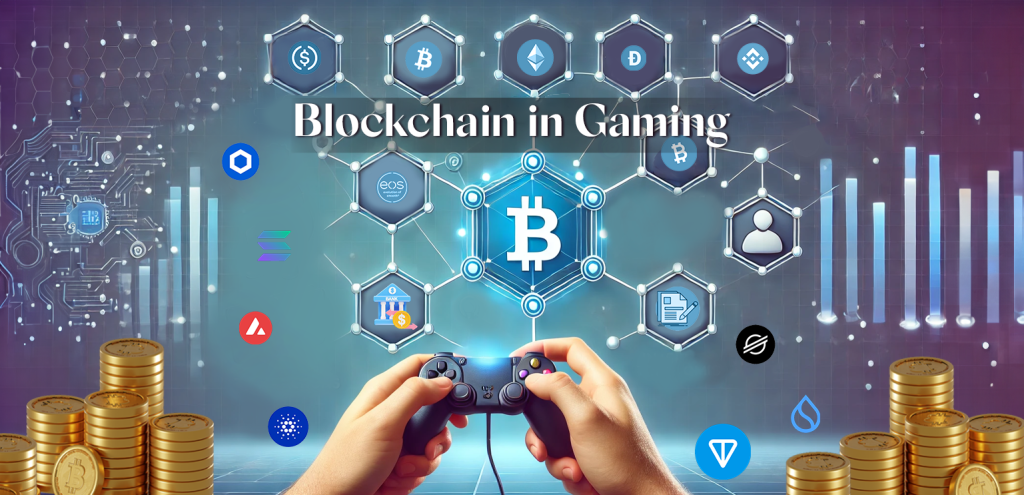
How Blockchain is Changing the Rules of Gaming Economies
Blockchain technology is revolutionizing a wide range of industries, and the gaming sector is no exception. In recent years, blockchain has gained significant attention for its ability to provide transparency, security, and decentralization. For players seeking a new way to engage with games, blockchain opens up a host of exciting possibilities, particularly in games that involve real money, such as online pokies Australia. To explore how blockchain is reshaping gaming economies, it’s important to understand the core principles behind the technology and how it can be applied to create fairer, more rewarding gaming experiences. For those interested in discovering blockchain-powered games, for online pokies Australia visit auwinpokies.com, a platform that showcases some of the innovative uses of this technology.
The Core Features of Blockchain in Gaming
At its heart, blockchain is a decentralized, distributed ledger that records transactions across many computers in such a way that the registered transactions cannot be altered retroactively. In gaming, blockchain can be applied to both in-game economies and the broader gaming infrastructure. Some key features of blockchain that make it attractive to the gaming world include:
- Transparency: Blockchain provides a transparent ledger that can be publicly accessed, allowing players to see exactly how transactions are handled. This transparency helps ensure that there is no manipulation of odds or unfair advantage, which is particularly valuable in games like online pokies Australia, where players rely on trust in the fairness of outcomes.
- Security: Blockchain uses cryptography to ensure that data cannot be tampered with, making it incredibly secure. In the context of online gaming, this adds a layer of protection against cheating, fraud, and hacking, which are common concerns in traditional gaming environments.
- Decentralization: Traditional gaming platforms are centralized, meaning that a single entity (the game developer or operator) controls the game. Blockchain, however, allows for decentralization, meaning players can have more control over the game and its economy. This can lead to a more player-driven experience where outcomes and rewards are distributed fairly and equitably.
- Ownership of Assets: One of the most exciting aspects of blockchain technology is that it allows players to truly own their in-game assets. Items like skins, characters, and even virtual currencies are stored on the blockchain, meaning they cannot be taken away by game developers. This gives players a sense of true ownership and the ability to trade or sell their assets on secondary markets.
How Blockchain Is Transforming In-Game Economies
Blockchain is radically transforming how in-game economies work, moving away from the traditional model where the game developers have complete control over the virtual currency and assets. Here are several ways blockchain is reshaping in-game economies:
1. True Ownership of In-Game Items
In many traditional games, players can purchase or earn items such as skins, avatars, or collectibles, but they don’t truly own them. If the game servers go offline or if a player is banned, they lose all of their items. Blockchain, however, enables true ownership of these assets through the use of non-fungible tokens (NFTs), which are unique digital assets stored on the blockchain. With NFTs, players can buy, sell, and trade in-game items on external marketplaces, even after they’ve stopped playing the game.
For example, in a blockchain-powered game, a player might win a rare skin or piece of equipment. This item would be recorded as an NFT, granting the player true ownership. They could choose to keep it, sell it to other players, or even use it in different games if the platform supports cross-game asset transferability.
2. Play-to-Earn (P2E) and Blockchain
The Play-to-Earn model is another major shift in gaming economies powered by blockchain. P2E games allow players to earn real-world value by participating in the game, often through cryptocurrency. Players can accumulate tokens or assets that hold tangible value in the real world. This not only incentivizes players to spend more time in the game but also introduces a new layer of economic interaction, where gaming becomes a source of income.
Games that use blockchain technology for P2E, such as “Axie Infinity” or “The Sandbox,” allow players to earn tokens that can be traded for real money. The integration of cryptocurrency or tokens into gaming economies offers a more fluid and dynamic way for players to earn rewards. This model is transforming the way games are monetized and how players engage with them, moving away from traditional subscription or one-time purchase models.
3. Decentralized Finance (DeFi) in Gaming
Blockchain is also integrating decentralized finance (DeFi) into gaming ecosystems, creating a new layer of financial opportunities for players. DeFi involves the use of blockchain-based financial tools, such as lending, staking, and liquidity pools, without the need for traditional financial institutions. In gaming, this could mean that players can stake their in-game assets (like tokens or NFTs) and earn interest or rewards.
For example, players could stake their earned tokens in a liquidity pool and earn passive income, effectively turning gaming into an avenue for both entertainment and financial growth. DeFi is opening up new possibilities for monetizing gameplay, offering players a chance to earn rewards beyond the traditional mechanics of winning games or completing quests.
4. Cross-Game Interoperability
One of the more exciting developments in blockchain gaming is the potential for cross-game interoperability. This means that players could use the assets they earn in one game in other blockchain-supported games. For example, a rare sword earned in one game could be used in another game, or players could trade NFTs across different gaming ecosystems. This is possible because blockchain allows for decentralized ownership of assets, which are not tied to a specific game or platform.
This feature has the potential to radically change how players perceive the value of in-game items. Instead of items being limited to one game’s ecosystem, players could view their digital assets as valuable commodities that can be transferred across different platforms, adding significant utility to in-game purchases.
Blockchain’s Impact on Fairness and Trust
One of the biggest challenges in online gaming, particularly in games like online pokies Australia, is ensuring that the outcomes are fair. Players rely on game developers to maintain a fair environment, but in traditional systems, developers have full control over the randomness of outcomes, which can lead to skepticism and distrust among players.
Blockchain technology addresses this issue by offering provably fair gameplay. Blockchain’s transparent and immutable nature allows players to verify the fairness of each transaction or outcome. For instance, in online pokies, the randomness of the spin can be verified through blockchain, giving players assurance that the results are not rigged. Players can access the blockchain’s ledger to confirm that the results were generated fairly, increasing trust in the system and reducing fraud.
Challenges and Considerations
While blockchain offers numerous benefits, it’s not without its challenges. High transaction fees and scalability issues are often cited as barriers to widespread adoption. Additionally, the complexity of blockchain-based games might deter casual players who are unfamiliar with cryptocurrency or blockchain concepts.
Moreover, the volatility of cryptocurrencies can pose a risk. A sudden drop in the value of the tokens used in games could have significant implications for the in-game economy. Game developers must carefully balance the introduction of blockchain technology with the need for a stable and enjoyable player experience.
Conclusion
Blockchain is undeniably changing the rules of gaming economies, offering players new opportunities for ownership, income, and engagement. With true ownership of in-game assets, the ability to earn real-world value through play-to-earn models, and the promise of cross-game interoperability, blockchain is reshaping how players and developers approach the gaming experience. For online pokies Australia visit auwinpokies.com to explore how blockchain is being integrated into traditional gambling experiences, offering players more transparent, secure, and rewarding gaming environments. As the technology continues to evolve, we can expect even more innovation in how blockchain shapes the future of gaming.
 Site Title
Leave a comment